Constipation is one of the most common digestive problems, and almost everyone experiences it at some point. It can be uncomfortable and frustrating, and it can affect both your mood and your daily life.
Many people reach for laxatives when they have trouble with bowel movements. They may help for a short time, but they are not the best long-term solution. In many cases, healthy eating, simple lifestyle changes, and natural remedies can help your digestive system work normally again.
In this article, we will look at what constipation is, what causes it, and how to prevent it naturally.
[!TIP] A simple place to start If your digestion feels slow, begin with three small habits: drink more water, add a little fiber, and take a short walk after meals. These changes often help more than quick fixes.
| Habit | Why it helps |
|---|---|
| Fiber-rich foods | Adds bulk and softens stool |
| Water | Keeps stools easier to pass |
| Daily movement | Helps food move through the gut |
| Regular bathroom routine | Prevents stools from sitting too long |
What is constipation?
How to know if your bowel habits are actually off.
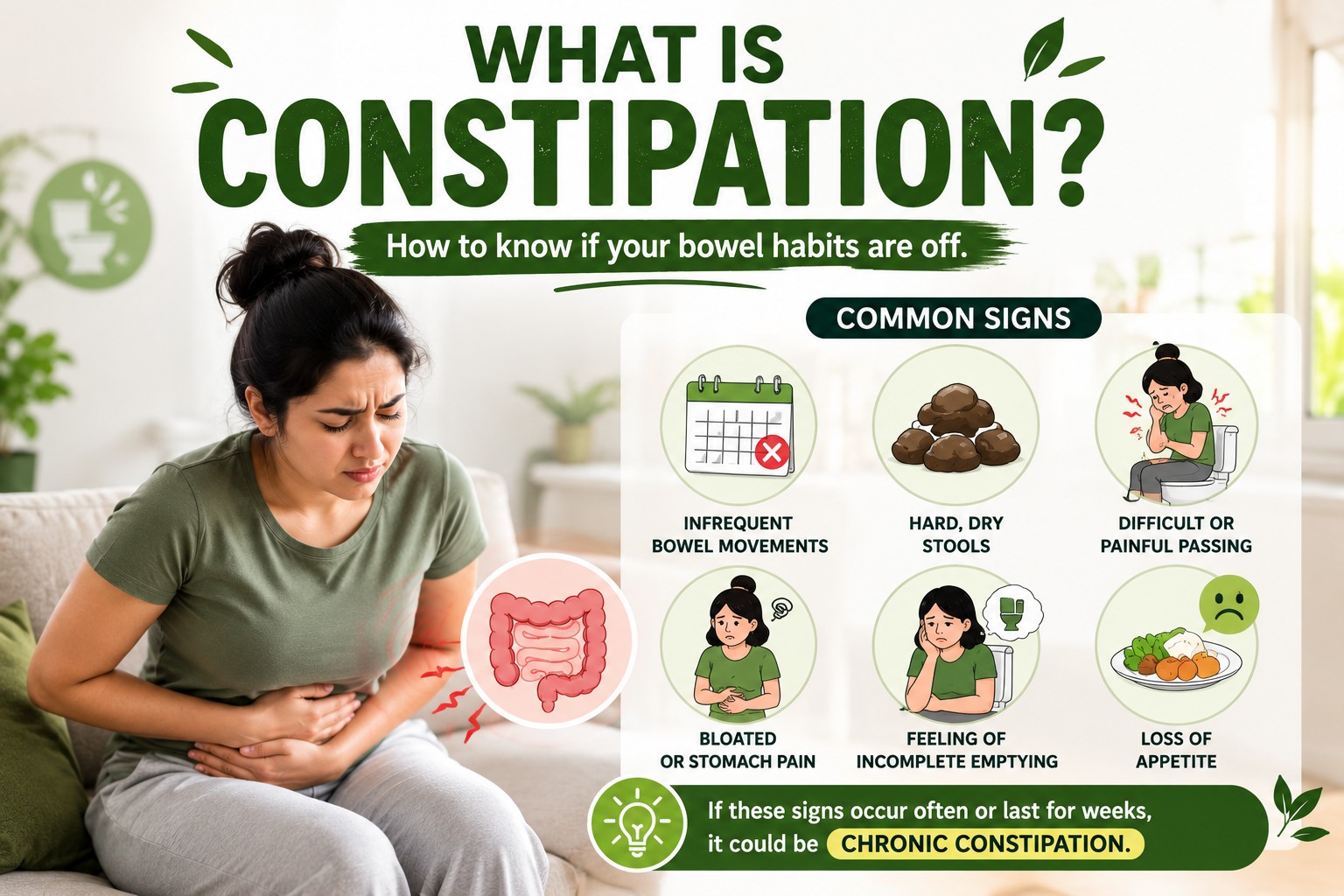
A person does not need to have a bowel movement every day to be healthy. Some people go three times a day, while others go three times a week, and both can be normal.
Constipation usually means one or more of the following:
- Bowel movements become infrequent, with fewer than three in a week
- Stools are hard, dry and lumpy
- Passing stools feels difficult or painful
- You feel like you have not fully emptied your bowels
- You feel bloated or experience stomach pain
- You may lose your appetite in some cases
If these symptoms continue for several weeks or happen regularly, it is called chronic constipation.
Common causes of constipation
Why digestion slows down and what usually triggers it.
Constipation can happen for many reasons. To find relief, it helps to understand the cause first.
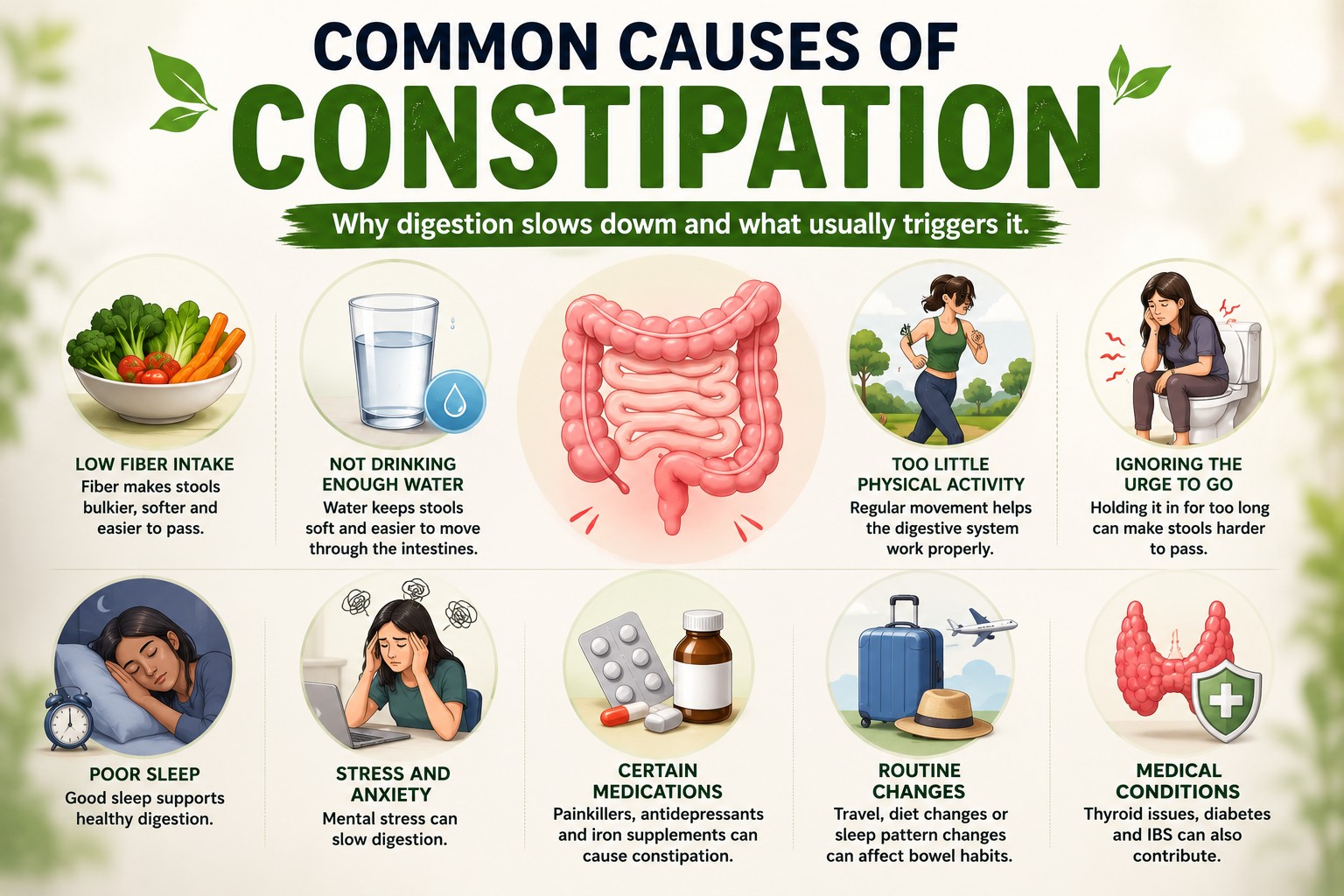
- Low fiber intake: Fiber makes stools bulkier, softer and easier to pass.
- Not drinking enough water: Water keeps stools soft and easier to move through the intestines.
- Too little physical activity: Regular movement helps the digestive system work properly.
- Ignoring the urge to go: Holding it in for too long can make stools harder to pass.
- Poor sleep: Good sleep supports healthy digestion.
- Stress and anxiety: Mental stress can slow digestion.
- Certain medications: Painkillers, antidepressants and iron supplements can cause constipation as a side effect.
- Routine changes: Travel, diet changes or sleep pattern changes can affect bowel habits.
- Medical conditions: Thyroid issues, diabetes and irritable bowel syndrome (IBS) can also contribute.
Healthy habits to prevent constipation
Small daily steps that support regular bowel movements.
Preventing constipation is often easier than treating it later. The best solutions are usually simple.
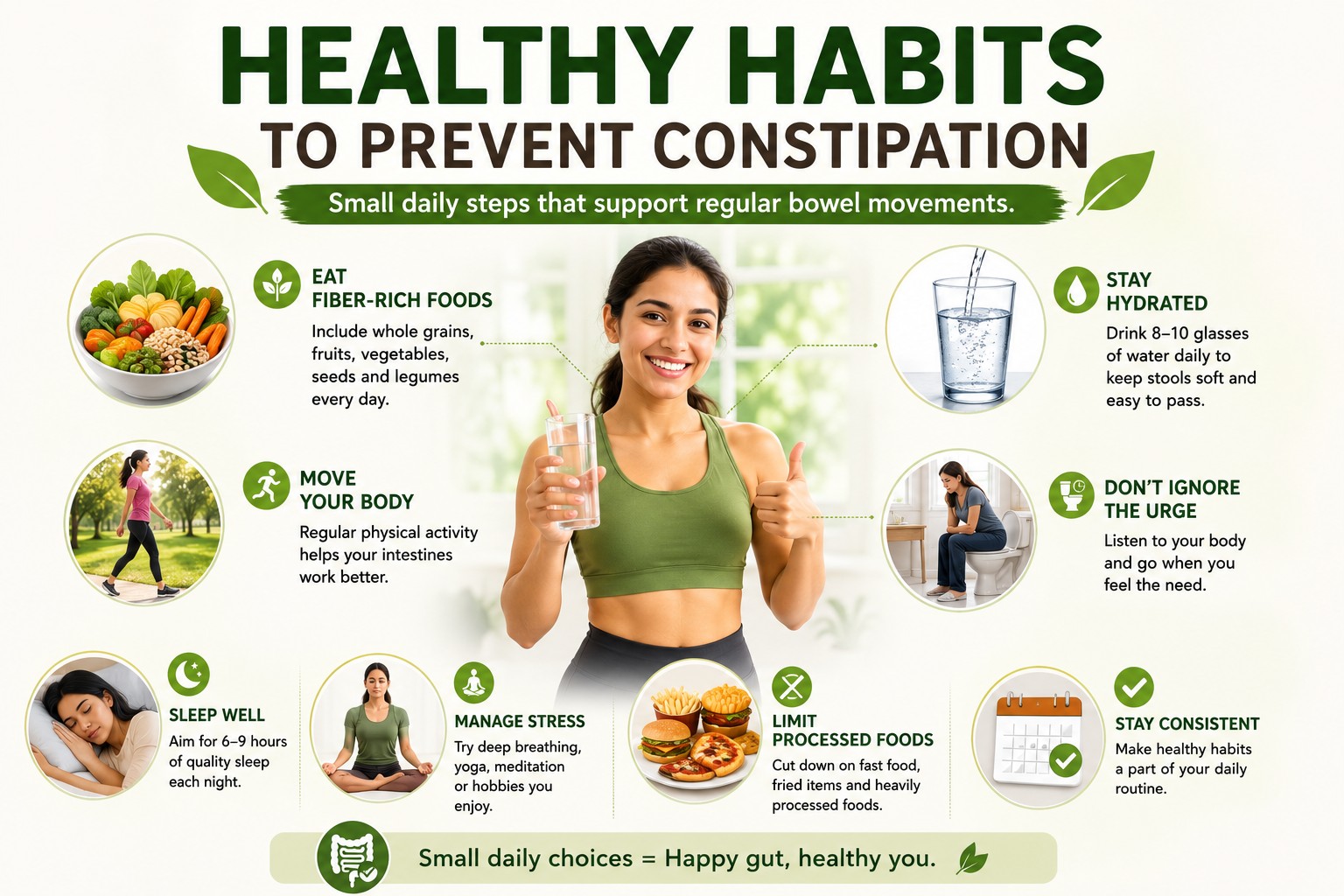
- Increase fiber intake: Fiber is one of the most effective ways to prevent constipation. An adult should aim for about 25 to 35 grams of fiber daily.
Good sources of fiber include:
- Whole grains
- Fruits such as apples, pears, bananas, oranges, berries, papaya and kiwi
- Vegetables such as carrots, broccoli, cabbage, green beans, pumpkin, okra, peas, sprouts, beetroot and leafy greens
- Seeds such as flax seeds and chia seeds
Increase fiber gradually to avoid gas and bloating.
- Stay hydrated: Aim for at least 8 to 10 glasses of water a day. If you are active or sweat a lot, you may need more. Warm water in the morning can also help stimulate bowel movement.
- Move your body: You do not need intense exercise. Simple activities like walking, cycling, yoga, swimming or light stretching can help. Even a short walk after meals can improve digestion.
- Do not ignore the urge to go: Listen to your body. If you feel the need to use the toilet, do not hold it in for too long.
- Sleep well: Aim for 6 to 9 hours of good sleep for better digestion.
- Manage stress: Deep breathing, yoga, meditation, reading, music, time outdoors or a hobby can help reduce stress and support digestion.
- Limit processed foods: Try to reduce fast food, fried foods, excess cheese and other heavily processed foods.
- Stay consistent: Healthy habits work best when they become part of your daily routine.
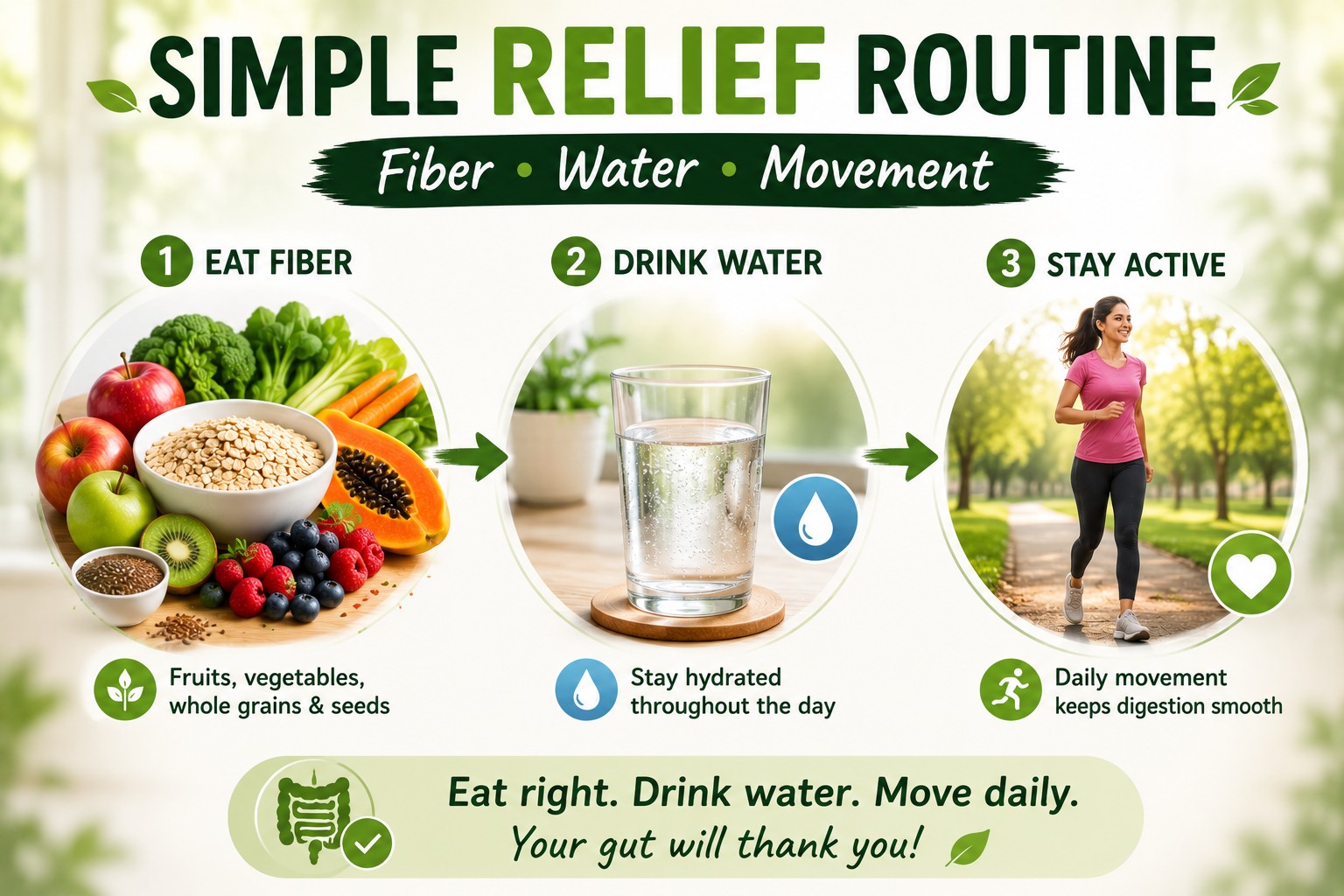
Natural and easy ways to find relief
Gentle ways to support digestion without relying on quick fixes.
- A daily fiber boost: Eat soaked raisins in the morning, add flax seeds or chia seeds to smoothies, snack on whole fruit, or switch from white bread to whole wheat bread or homemade roti.
- Smart hydration habits: Start the day with a glass of warm water, or try lemon water or coconut water for extra hydration.
- Small movements: Take a 10 to 20 minute walk after meals, or try gentle yoga poses such as the wind-relieving pose or child’s pose to ease bloating.
- Natural laxatives in moderation: Prunes, figs, aloe vera juice and psyllium husk (isabgol) mixed with water can help in moderation.
- Try natural probiotics: Foods like yogurt with live cultures, kefir and fermented vegetables can support digestion.
- Massage and relaxation: Gentle belly massage in slow, circular motions may help stimulate bowel movement. A warm bath can also relax the body and ease discomfort.
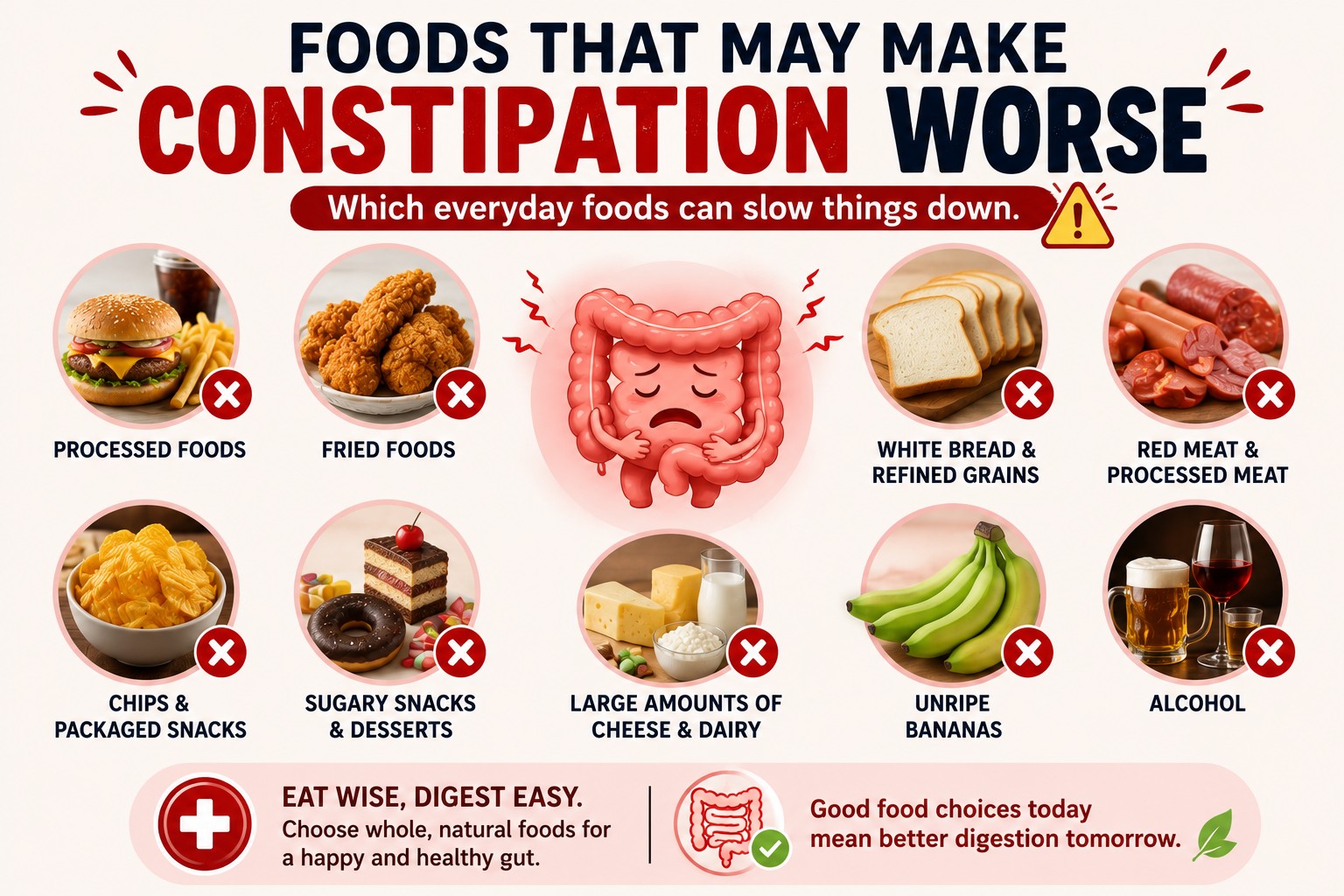
Foods that may make constipation worse
Which everyday foods can slow things down.
Some foods may slow digestion if eaten too often. These include:
- Processed foods
- Fried foods
- White bread and refined grains
- Red meat and processed meat
- Chips and packaged snacks
- Sugary snacks and desserts
- Large amounts of cheese and dairy
- Unripe bananas
- Alcohol
When should you see a doctor?
When symptoms are more than a temporary problem.
Natural remedies help many people, but you should seek medical advice if:
- Constipation lasts for several weeks or keeps coming back
- Home remedies do not help
- You notice blood in your stool
- You have severe stomach pain or continuous bloating
- You are losing weight without trying
- You have vomiting along with constipation
Final thoughts
A simple reminder that healthy digestion starts with everyday habits.
Constipation is common, but it is not something you have to accept as part of daily life. Small changes such as increasing fiber, staying hydrated, moving your body, sleeping well and managing stress can make a big difference. If symptoms are unusual or persistent, pay attention to your body and seek medical advice. Healthy digestion starts with everyday habits, not quick fixes.