Introduction
From social media to everyday conversations, health and fitness advice is everywhere these days—but not all of it is backed by facts. One of the most common questions people ask is: does drinking cold water make us gain weight?
Many people believe that cold water slows digestion and stores more fat in the body. But is that really true, or is it just another myth?
Let's discuss it in simple terms.
[!TIP] At a glance
- Plain cold water has zero calories.
- It does not directly cause weight gain.
- It may use a tiny amount of energy to warm up, but the effect is negligible.
- The real causes of weight gain are overall calorie intake, lifestyle, and activity level.
Quick comparison
| Topic | Reality |
|---|---|
| Calories | Zero in plain water |
| Weight gain | Not caused directly by cold water |
| Digestion | Usually unaffected by water temperature |
| Best choice | Choose the temperature you enjoy and can drink consistently |
Does Cold Water Have Calories?
The simple answer is no.
Whether water is cold, hot, or at room temperature, it has zero calories. Calories come from carbohydrates, fats, proteins, and sugary drinks—not from plain water. Since plain water contains no calories, it cannot make you gain weight on its own.
[!NOTE] A simple fact Water is calorie-free whether it is cold, warm, or at room temperature.
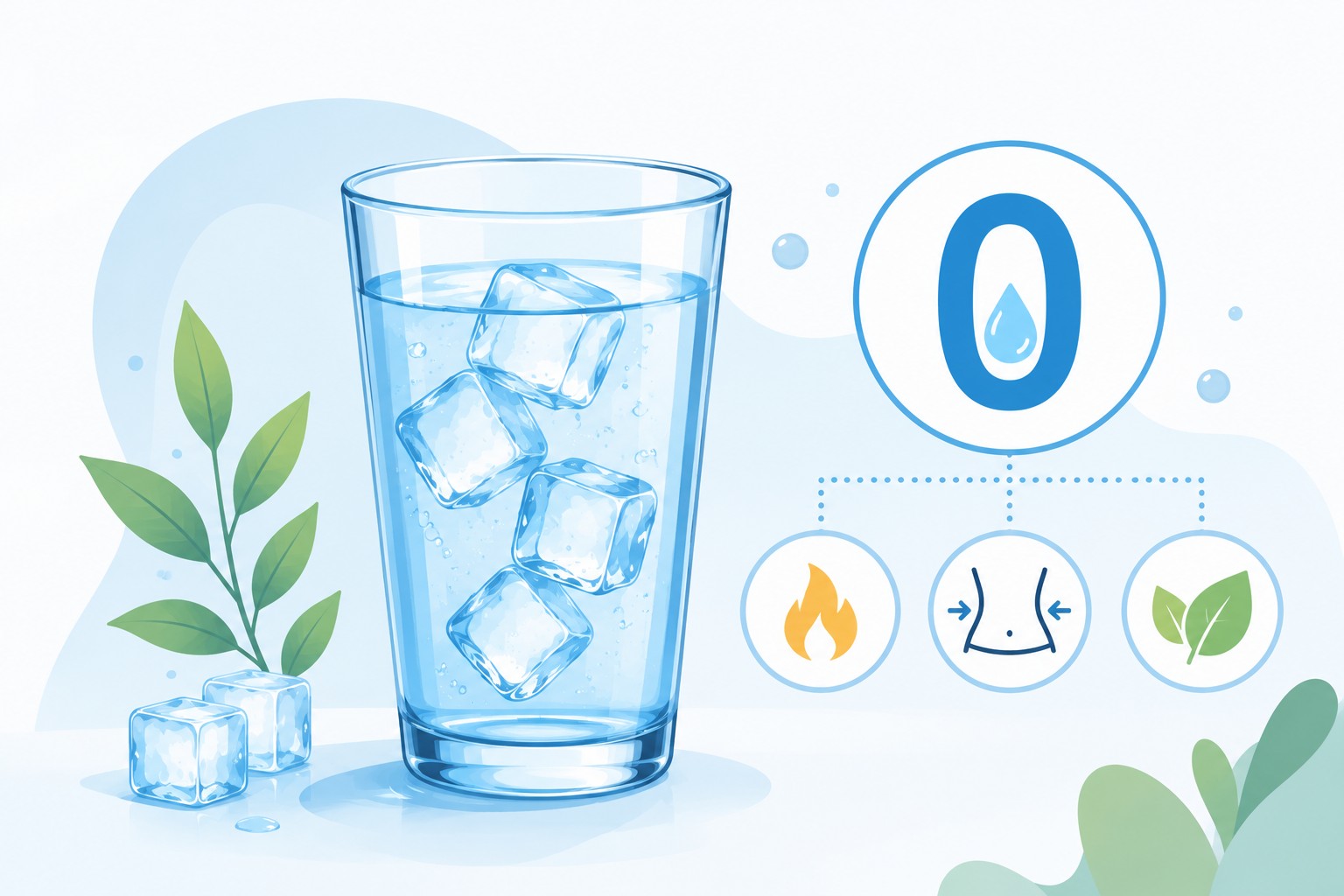
So there is no need to worry about drinking cold water.
What Happens When We Drink Cold Water?
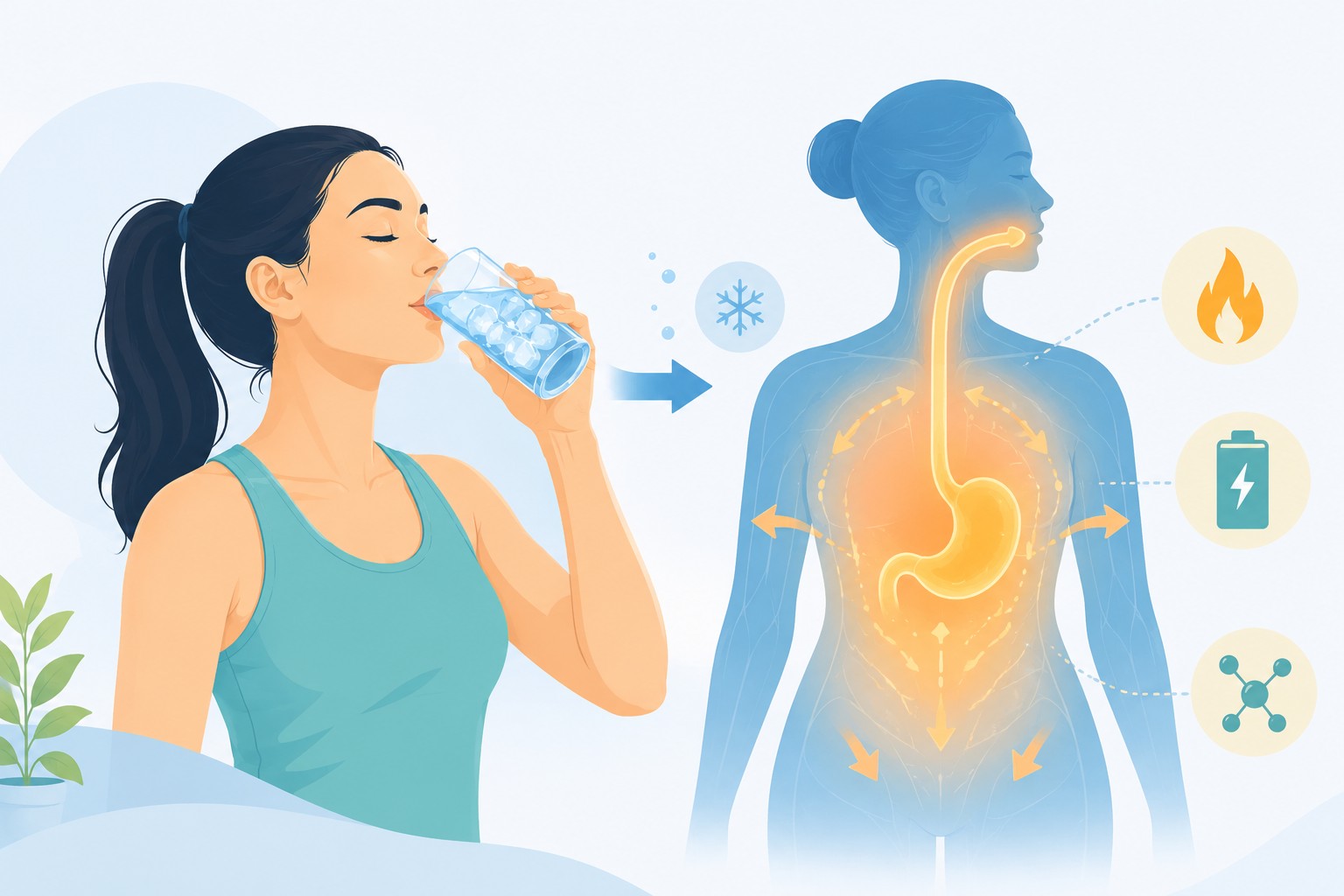
Cold water usually has a temperature between 35°F and 60°F (2°C to 15°C). When we drink it, our body uses a small amount of energy to warm it up to internal body temperature.
Some studies suggest this may burn a very small number of extra calories, but the effect is too small to meaningfully affect weight.
[!IMPORTANT] What matters most The tiny energy used to warm cold water is nowhere near enough to change your weight. What really matters is your total diet, activity, and habits.
Common Myths About Cold Water
Myth 1: Cold water causes fat to harden in the stomach
Truth: This is not true. Your stomach works the same way whether you drink cold or hot water. It does not trap fat or make it harder to lose.
Myth 2: Cold water slows digestion
Truth: Digestion depends mostly on what you eat, not on the temperature of the water. Heavy, oily, or spicy foods usually take longer to digest than fruits or vegetables.
Myth 3: Cold water causes gas or bloating
Truth: That is not usually the case. Some people with sensitive stomachs may feel slightly fuller after drinking very cold water, but the feeling is usually temporary.
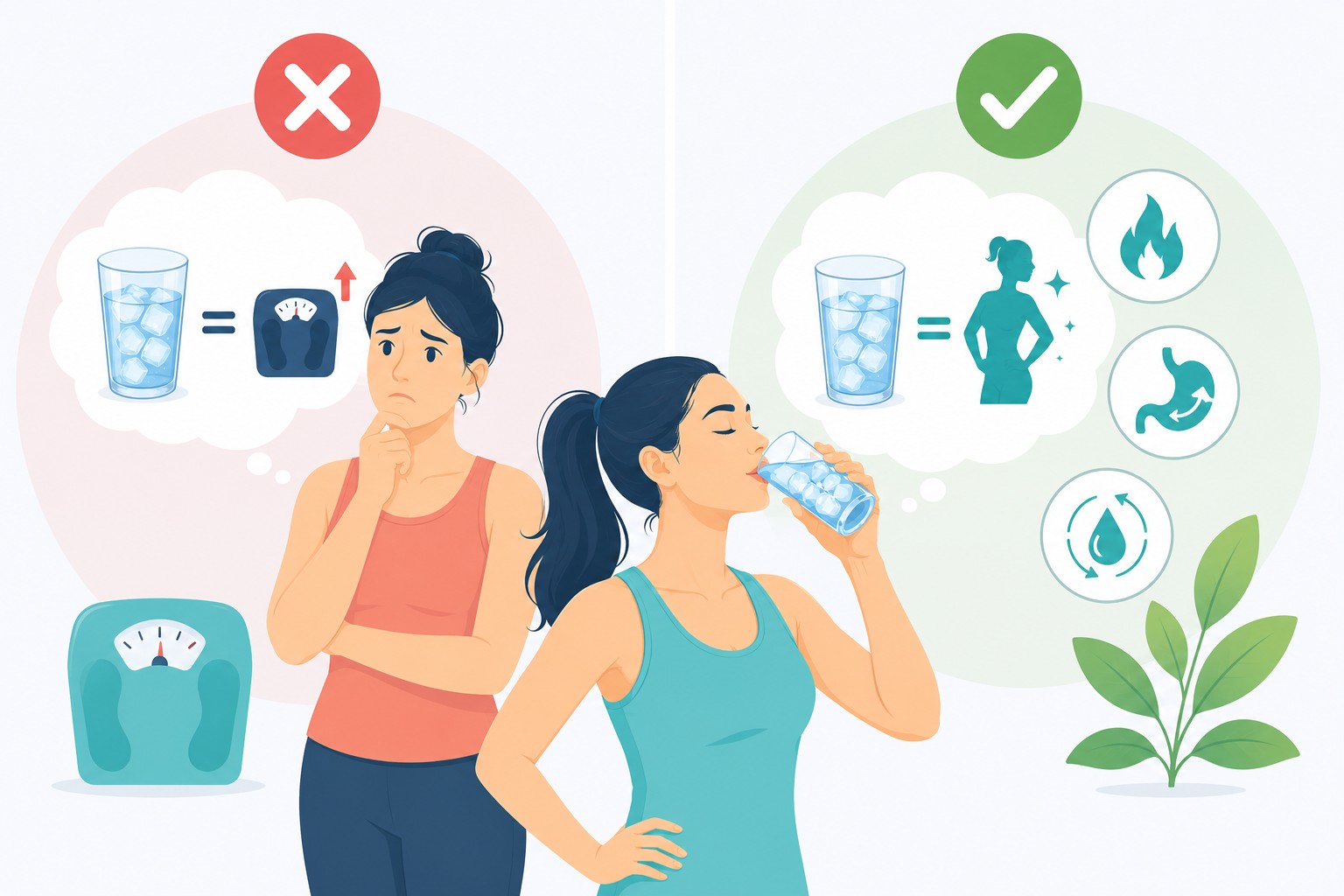
Myth 4: Cold water makes us fat
Truth: This is the biggest myth of all. Weight gain happens when we regularly consume more calories than our body burns. Plain water—whether cold, hot, or room temperature—contains no calories, so it will not cause fat gain.
Why Do People Believe These Myths?
Traditional beliefs passed down through generations
Many of us grow up hearing that cold water is bad for digestion or causes weight gain. When these ideas are repeated in families for years, they start to seem like facts.
Temporary discomfort
Some people feel slightly bloated or uncomfortable after drinking very cold water. When the real cause is food, eating habits, or a digestive issue, they may wrongly blame the water itself.
Misinformation from social media
False health myths spread quickly online. When the same idea is repeated again and again, people may believe it without checking the facts.
Lack of awareness
Many myths continue simply because people do not know that there is no strong scientific proof linking cold water to weight gain.
Surprising Benefits of Drinking Cold Water
Even though cold water does not cause weight gain, it does have some benefits:
- It hydrates your body just like warm water or room temperature water.
- It feels refreshing and can help you wake up.
- After physical activity, it may help cool down your body faster.
- It can make your stomach feel full for a while, which may reduce cravings.
Is Warm Water Better Than Cold Water?
Some people prefer warm water because they feel it supports digestion. Others prefer cold water because it feels more refreshing. But neither one causes weight gain.
What matters most is hydration, and both are good for that. So drink the water that feels most comfortable for you and your situation.
| Aspect | Cold Water | Warm Water |
|---|---|---|
| Digestion support | Neutral | Often feels easier for some people |
| Refreshing feeling | Yes | Less |
| After workout | Great | Not ideal |
| Hydration | Yes | Yes |
Healthy Tips for Hydration
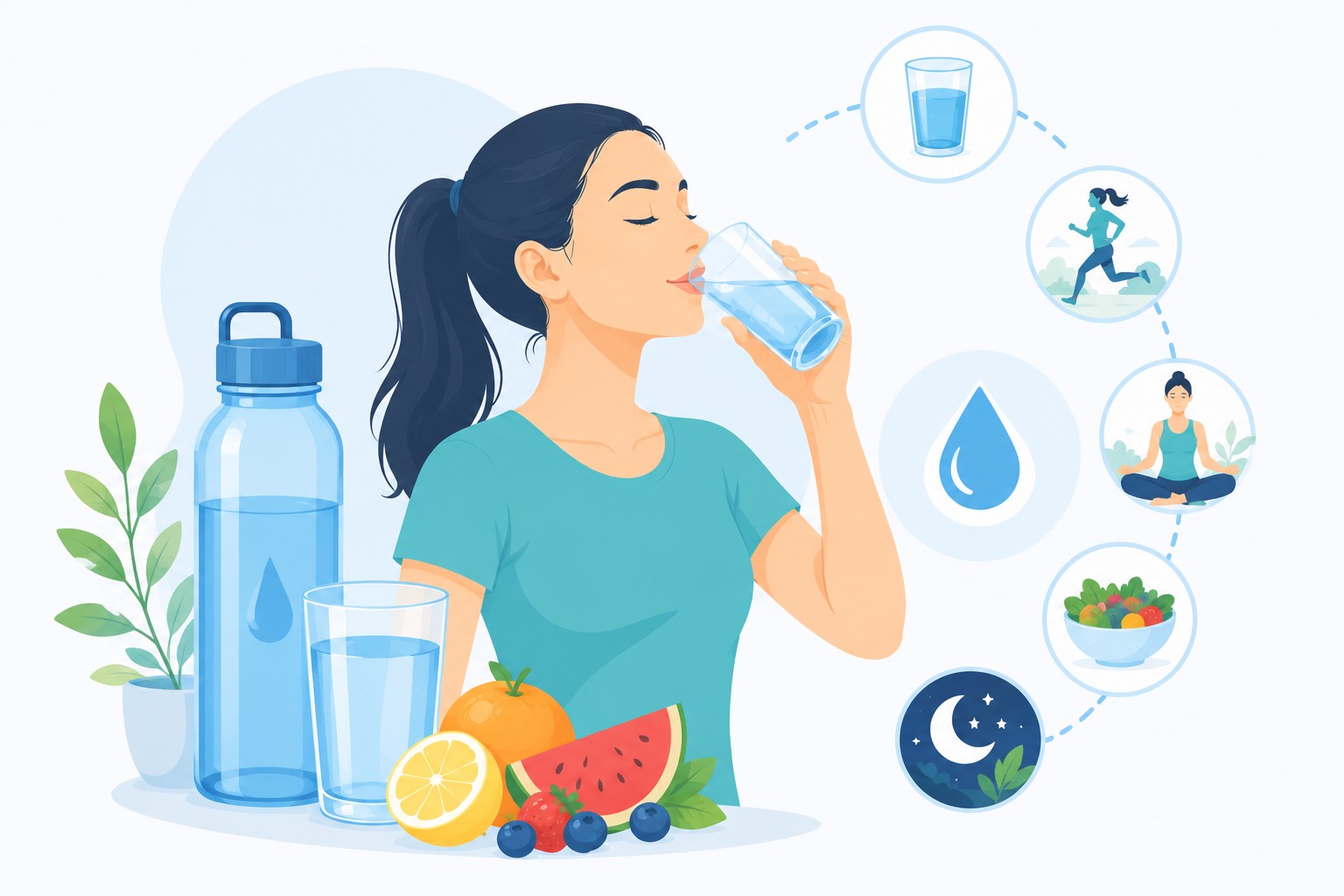
- Drink water regularly instead of waiting until you feel very thirsty.
- Take a few sips before meals if it helps control appetite.
- Carry a water bottle when you go outside.
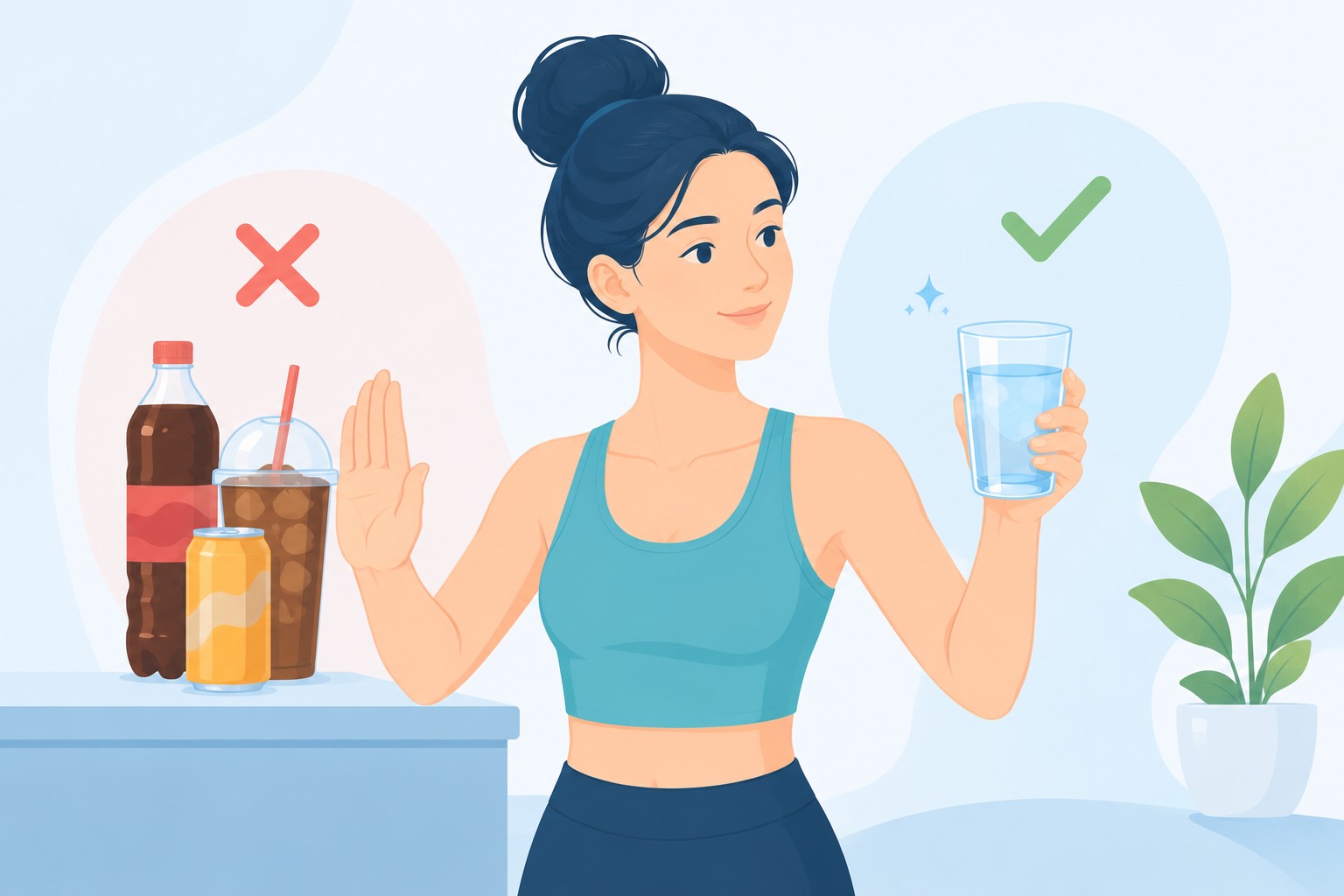
- Choose plain water over sugary drinks.
- Eat water-rich fruits and vegetables.
The best temperature is the one you will actually drink consistently.
Cold Water vs Cold Drinks
Here is an important point: do not mix cold water with cold soda, juice, or milkshakes.
Plain cold water is calorie-free, but sugary drinks can contain a lot of calories. The temperature does not matter as much as the ingredients.
Final Thoughts
The belief that cold water makes you fat is a myth. Plain water is calorie-free, and the main drivers of weight gain are diet, lifestyle, and movement.
Whether you prefer cold, warm, or room temperature water, the healthiest choice is the one that keeps you consistently hydrated.
[!IMPORTANT] Bottom line If you enjoy cold water, drink it without guilt. If you prefer warm water, that is also perfectly fine. The best choice is the one that keeps you hydrated every day.